
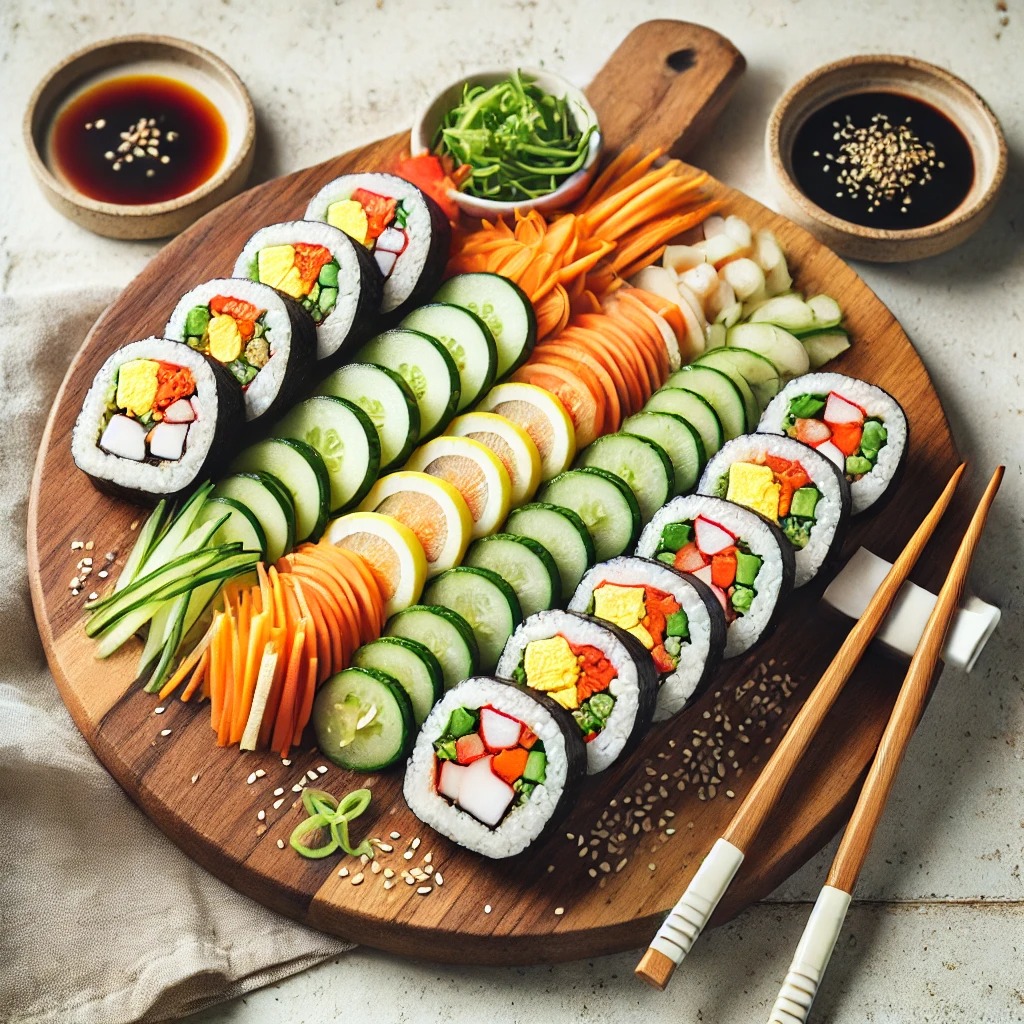
1. What is Gimbap?
Gimbap is a traditional Korean dish made by rolling seasoned rice and various fillings in a sheet of dried seaweed. It is a popular choice for lunch boxes, picnics, and snacks due to its convenience and versatility. Depending on the ingredients used, gimbap can have a variety of flavors.
2. Essential Ingredients for Gimbap
To make gimbap, you will need the following ingredients:
Essential Ingredients
- Seaweed (Gim): Use gimbap-specific seaweed to prevent tearing.
- Rice: Cooked rice mixed with sesame oil and salt for seasoning.
- Pickled radish (Danmuji): Adds a crunchy texture and a hint of sweetness.
- Braised burdock root (Ueong jorim): Provides a sweet and savory taste.
- Imitation crab stick (Masal): Enhances the umami flavor.
- Ham: Cooked and sliced for a rich, savory taste.
- Egg omelet: Sliced into strips for a soft texture.
- Cucumber or spinach: Adds freshness and extra nutrients.
- Carrot: Julienned and stir-fried for added color and texture.
Optional Ingredients
- Tuna mayo, cheese, bulgogi, crab meat, kimchi, and other variations can be added according to preference.
3. How to Roll Gimbap Properly
1) Preparing the Rice
The rice should be slightly firm rather than overly sticky. Mix 1 tablespoon of sesame oil, a pinch of salt, and sesame seeds into the warm rice.
2) Preparing the Fillings
- Beat the eggs and cook them into a thin omelet, then slice into strips.
- Slice ham and imitation crab into appropriate sizes and lightly cook them.
- Julienne carrots and lightly stir-fry them in oil.
- Blanch spinach, squeeze out excess water, and season with salt and sesame oil.
- Cut pickled radish and burdock root into suitable lengths.
3) Rolling the Gimbap
- Place a sheet of seaweed on a bamboo rolling mat.
- Spread the prepared rice evenly on the seaweed, leaving about 2–3 cm at the end.
- Arrange the fillings evenly over the rice.
- Using the bamboo mat, tightly roll up the gimbap.
- Brush the finished roll with sesame oil and slice with a sharp knife.
4. Tips to Prevent Gimbap from Falling Apart
- Avoid using too much rice, as it makes rolling difficult.
- Lightly moisten the edge of the seaweed with water to seal the roll.
- Distribute the fillings evenly for a well-balanced roll.
5. Storage and Serving Suggestions
- Storage: Gimbap can dry out over time, so wrap it in plastic wrap or store it in an airtight container.
- Serving Ideas: Leftover gimbap can be pan-fried for crispy gimbap rolls or used to make fried rice.
6. Conclusion
Gimbap may seem simple, but its flavor depends on the balance of ingredients and the rolling technique. By experimenting with different fillings, you can create a personalized and delicious gimbap that suits your taste. Try making your own gimbap and enjoy a tasty homemade Korean dish!
How to Make Doenjang Jjigae: A Deep and Savory Traditional Korean Recipe

 By
By